Virginia Inshore Fishing in the Cold: What to Wear and Bring

Fish the Cold Season Right
Gear up and get out on Virginia's inshore flats with a local guide.

Published:
Updated:
The first hour on the water in late November has a way of teaching you what you forgot. Your fingers go stiff while you are tying on a fly, and a bit of wind across the flats cuts straight through a sweatshirt that felt fine in the parking lot. Anglers who plan for that moment fish longer and fish better, and that is what this checklist is for.
Virginia inshore fishing in late fall and early winter is a different job than fishing in summer. The shallow water is open and exposed, and there is very little shelter once you are out on a flat. Getting your clothing and gear sorted before the trip is the best way to stay comfortable when the weather turns. Jason Yost of Custom Tides Guide Service runs light tackle and fly fishing trips on Virginia's inshore waters, and the advice below is the kind of practical preparation that suits those trips.
Start With Layers, Not One Heavy Coat
The basic idea behind fishing clothing layers is simple. Several thin layers trap more warmth than one thick one, and you can take a layer off when the sun comes out or add one when a breeze picks up. A single bulky jacket gives you only two settings, on or off.
Begin with a base layer that sits against your skin. Synthetic fabric or merino wool is the usual choice because both keep working when damp. Cotton does the opposite. It soaks up sweat and spray, holds the moisture against you and pulls heat out of your body, so leave it at home for cold-weather fishing.
Over the base layer, add a mid layer for insulation. A fleece or a light insulated pullover works well here because it is warm without being stiff. You want to be able to cast, so check that you can raise your arms and rotate your shoulders freely before you leave the house. Bulky sleeves that bind at the elbow will wear you out over a full morning.
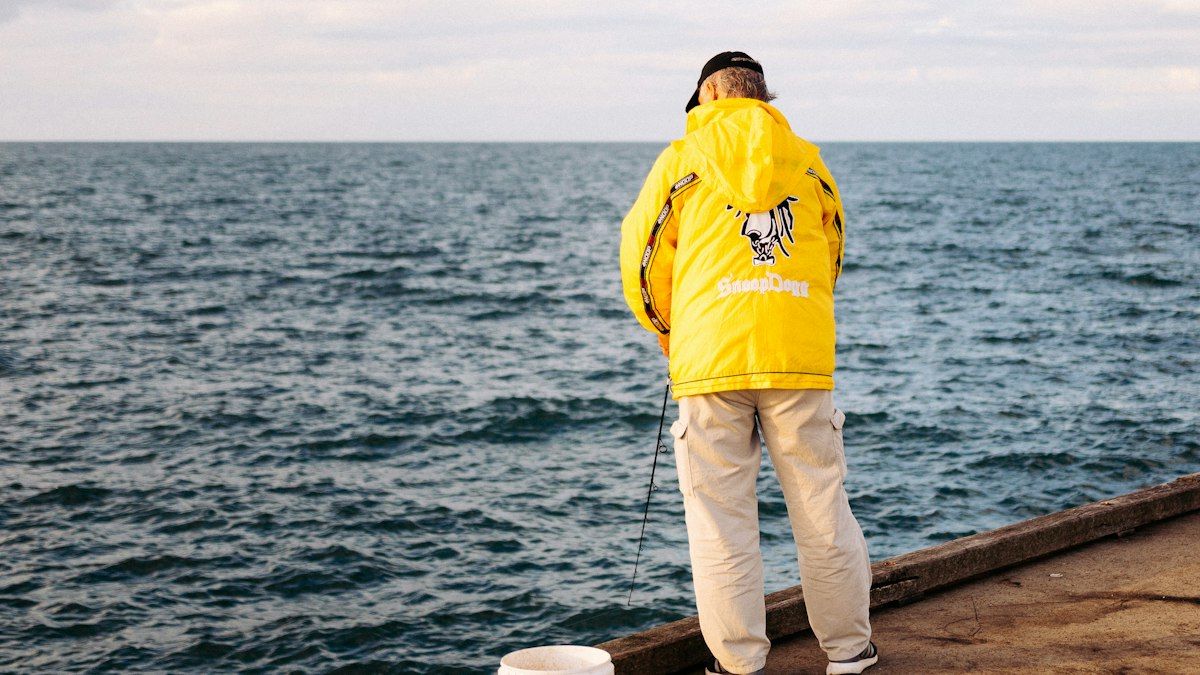
- Base layer: synthetic or merino top and bottoms
- Mid layer: fleece or light insulated pullover
- Outer layer: windproof and water-resistant shell
- Extra: a dry spare layer in a bag, just in case
Wind and Spray Protection on Open Flats
Wind is the real enemy on open water. A calm 40-degree morning on land can feel far colder once you are running across a bay or standing on a casting platform with nothing to block the breeze. Your outer shell does most of the work here, so it should be fully windproof and shed water.
Spray matters more than many anglers expect. Even a short run to the fishing spot can put a fine mist on your face and sleeves, and wet cold skin loses heat fast. A hooded shell with a snug collar keeps that spray off your neck. Waterproof pants or bibs are worth wearing too, since wet knees and thighs chill quickly once the wind hits them.
Do not forget your head and face. A warm hat that fits under a hood, or a fleece beanie worn beneath a brimmed cap, covers a lot of heat loss. A neck gaiter or buff can be pulled up over your nose and ears when the wind picks up, then dropped when you warm up. Polarized sunglasses help in two ways: they cut the glare that makes it hard to see into shallow water, and they shield your eyes from wind and spray.
Keeping Hands and Feet Warm
Hands and feet go first, and cold fingers make fishing miserable. You need to feel a line, tie knots and handle a rod, so heavy gloves are not always the answer. Many anglers carry two pairs. A thin, grippy fishing glove or a fingerless option is used while casting and tying, and a warmer pair stays handy for the run between spots. Some bring chemical hand warmers and keep them in a pocket to warm fingers between casts.
For feet, start with socks. Wear a moisture-wicking liner under a thick wool or synthetic sock, and make sure your boots are not packed so tightly that blood flow is cut off. Tight boots make feet colder, not warmer, because there is no space for warm air to sit around your toes. Sizing up slightly is often the smarter move.
Wet feet in cold air are a quick way to end a trip early. If you expect to step into shallow water, waterproof footwear matters. Bring a spare pair of dry socks in a sealed bag. Changing into them mid-trip is a small thing that feels like a big win.
Light Tackle and Fly Gear in Cold Conditions
Cold weather changes how your gear behaves. Fly line stiffens and coils more in low temperatures, which can make casting harder and tangle more easily. A line suited to cooler water, or simply stretching it out before you start, helps it lay out cleaner. Check your line and knots before the trip, since stiff fingers make retying a slow business.
Wind is the other factor on open flats. A fly rod that handles a breeze well and a leader you can turn over cleanly will make your casts more accurate when conditions are not perfect. If you fish light tackle, keep your rigs simple so you are not fumbling with small parts in the cold. Pre-tie a few leaders or rigs at home where it is warm.
Casting accuracy is a skill worth sharpening before you go. A short practice session in a field or backyard, in your cold-weather clothing, tells you whether your layers restrict your cast. It is much easier to find that out at home than on the water. Guided trips with Jason include one-on-one time with a local captain, and working on casting precision and strategy is something anglers can ask about when planning a Flats trip.
Small Items That Make a Big Difference
A few extras do not take much room but pay off all day. A thermos of something hot, whether coffee, tea or soup, gives you a break from the cold and a morale boost mid-morning. Snacks that keep you fueled matter too, since your body burns more energy when it is working to stay warm. Sunscreen and lip balm still count in winter, because the sun reflecting off the water can burn exposed skin even when the air is cold.
Bring a small dry bag for anything you do not want to get wet, such as a phone, keys and spare gloves. Let the guide know about any gear you are unsure of before the trip. When you head out with Custom Tides Guide Service on Virginia's inshore waters, a quick conversation beforehand about the forecast and what to bring can save you from guessing at the dock.
A Simple Checklist Before You Leave
Run through this list the night before, and the morning of the trip will go smoother. Check the forecast for wind as well as temperature, because wind speed changes how cold it feels more than almost anything else. Lay out your layers in the order you will put them on, and pack the extras so they are easy to reach.
- Moisture-wicking base layer, top and bottom
- Insulating mid layer such as fleece
- Windproof, water-resistant outer shell with a hood
- Warm hat, neck gaiter and polarized sunglasses
- Two pairs of gloves and hand warmers
- Liner and wool socks, plus a dry spare pair
- Waterproof footwear that is not too tight
- Thermos, snacks and a dry bag
Cold-weather fishing rewards the angler who shows up prepared. Dress in layers, protect against wind and spray, look after your hands and feet, and make sure your tackle is ready for the conditions. Do that, and the cold stops being the story and the fishing takes over.